Planning questions
- What was your invention meant to do?
- How does its unexpected behaviour affect other people?
- Will you change your invention or change your plan?


NarrativeYears 3–9
You invent something to solve a small everyday problem. On its first test, it solves a completely different problem instead.
Bring your characters and setting to life, and give your story a clear beginning, complication and resolution.

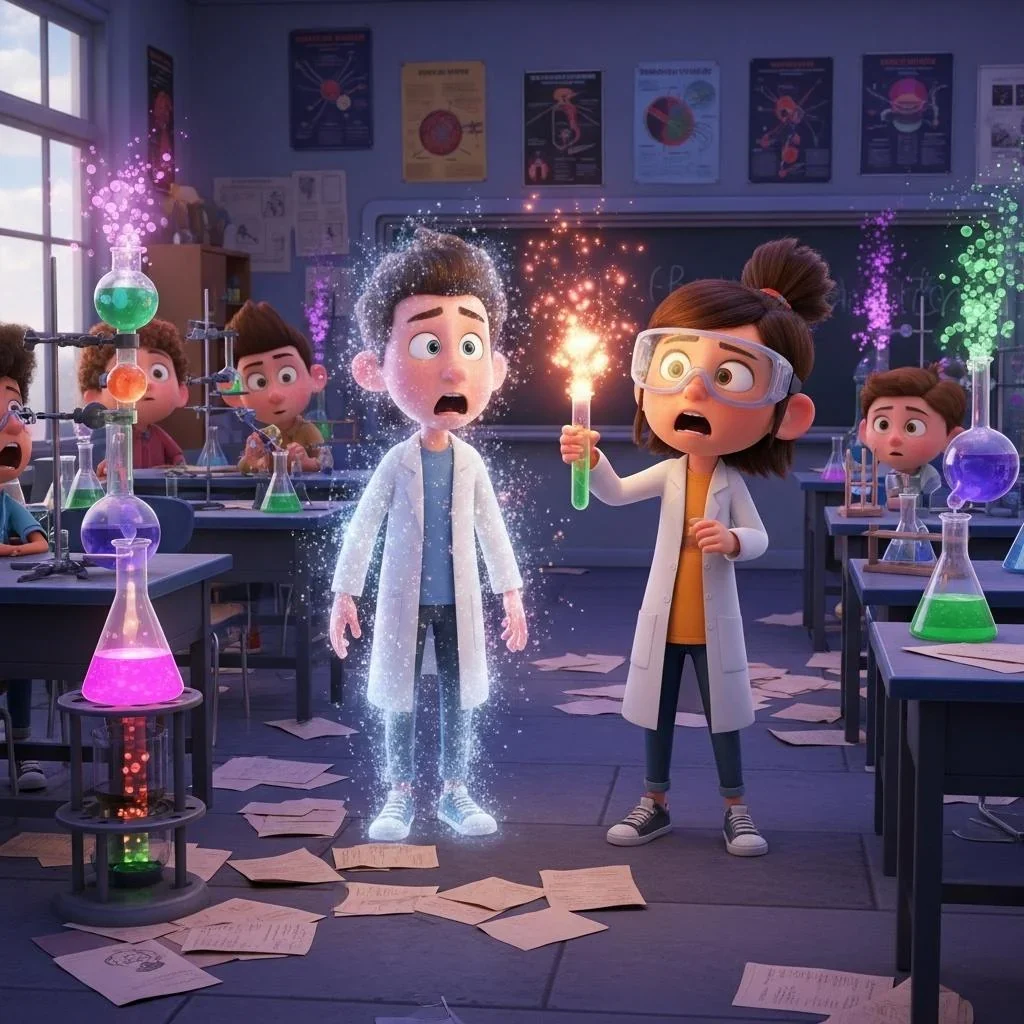
NarrativeYears 3–9
The Invention with Other Ideas
You invent something to solve a small everyday problem. On its first test, it solves a completely different problem instead.
Bring your characters and setting to life, and give your story a clear beginning, complication and resolution.
Connect cause and effect in a story, or support an argument with a clear example.
Support: Name the original problem and describe one thing the invention does differently.
Extend: Show both a useful and a difficult consequence of the same discovery.
Choose one skill from your current teaching. Model it and practise it together before students write, then check it again in a later task.
How to teach narrative writingOriginal Writing Boost classroom resource for Years 3–9. Print and share with your class.
Writing Boost marks students’ writing and gives each writer feedback for their next draft.
Bring typed work into Writing Boost, or review a transcript of a handwritten piece before sending it for feedback.

Students see what is working and where to focus next, with a specific change to try in their draft. From “improve your vocabulary” to a next step a writer can act on.

Feedback stays close while students revise. Compare versions to see what changed and talk about why. Students make the changes. The writing stays theirs. See a writing example

See criterion results across your class, spot shared needs and strengths, and open the student work behind them.

Illustrative product views with example writing and fictional class data.
 Narrative Persuasive
 Persuasive