The ten criteria
In the NAPLAN writing marking guide, a story about a lottery win and a story about a bus trip to outer space both score 29 out of 47. The film goes through the ten scores behind each total and compares them criterion by criterion.
Picking up at .
Free professional learning11 short filmsabout an hour in all
Eleven short films on the NAPLAN narrative writing marking guide. Ten of them cover one criterion each, and one shows how the ten scores add up. They all use stories from the guide.
This first film is open to everyone. The other ten play a preview, then open with your email. It’s free.
All eleven films are open in this browser.
Opening the course…
Ten cover a criterion each, in the guide’s order. The eleventh shows how the ten scores add up.
In the NAPLAN writing marking guide, a story about a lottery win and a story about a bus trip to outer space both score 29 out of 47. The film goes through the ten scores behind each total and compares them criterion by criterion.
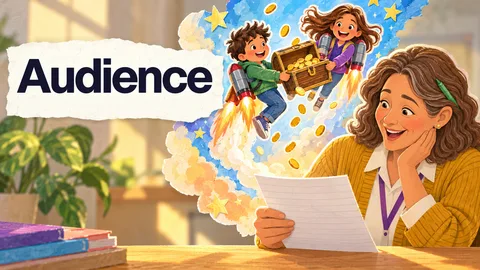
Two stories from the guide: in one, two friends find a box of gold, lose it to a bully and win it back with jet packs; in the other, a class goes on an excursion to outer space and nothing really goes wrong. One scores higher for Audience, and the film shows why through the guide’s three verbs: orient, engage and affect.
One student’s story in the guide ends by waking from a dream; another does not conclude, and is marked higher for Text structure. The film follows four stories through orientation, complication and resolution, from a one to a four.
A story that stays inside a small wooden box outscores, for Ideas, a story with a boat, a forbidden island, a pirate ship, a house out of nowhere and a treasure map. The reason is one word in the guide’s scale: elaborated.
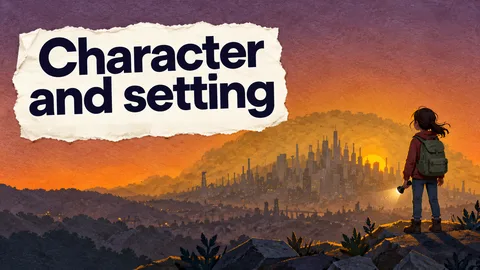
One student’s story gives its setting two words, “the City”; another lets us see its city, and their markers put the two stories three marks apart, out of four. The film goes up the scale on four of the guide’s own words: “only names”, a “suggestion”, “emerges” and “selected”.
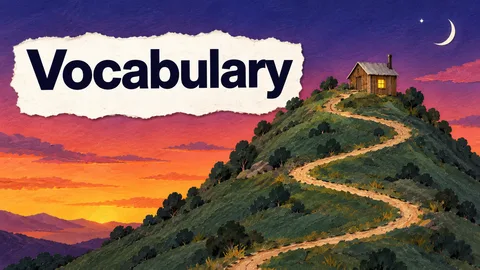
Three stories from the guide, and the words their markers picked out: a bus trip to outer space, a night at a hut on a hill and a warrior’s revenge. Low on the scale a marker can count the precise words; from a four, it is what the words are doing.
A line in one student’s story says they got all of “them”, and the reader has to go back up the page to look for what “them” means. The film follows that linking through three stories, from a two to a four, with the four devices the guide names.
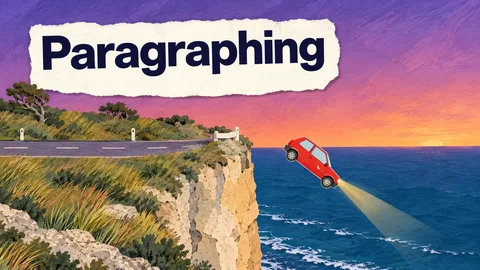
In one student’s story a car leaves the road between two paragraphs: it isn’t written anywhere, it happens in the gap. Paragraphing is worth up to two marks, and the film shows its three scores as three gaps, in the markers’ own words: random, appropriate and deliberate.
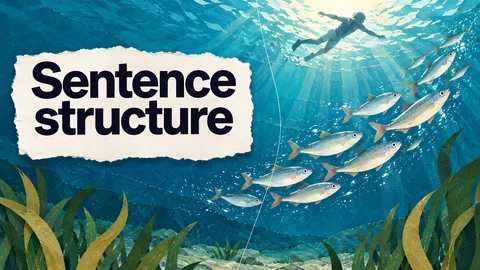
Two of the guide’s stories score a four for Sentence structure for opposite reasons: in one every sentence is correct but there is not enough variety; in the other the sentences are varied, with two errors and a missing word. Around them the film sets the guide’s three kinds of sentence and its whole scale, from a run-on at one to a six.
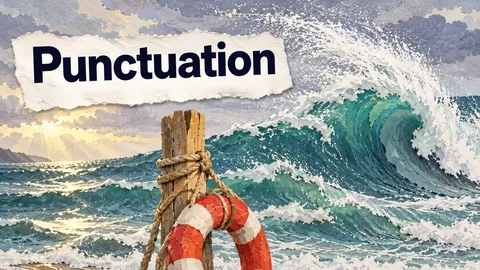
Leave out too many full stops and a story can’t score more than two out of five for Punctuation, whatever else is on the page. The scale asks about sentence punctuation first and everything else after, and three of the guide’s stories show a two, a three and a five.
In one of the guide’s stories the marker lists three spelling errors, and it scores three out of six; in another the marker lists ten, and it scores five. Spelling isn’t a count of mistakes: the guide’s skill focus is the accuracy of spelling and the difficulty of the words used.
A certificate Of the time watched, for anyone who would like one. It comes with free access. The NAPLAN writing marking guide scores a story on ten criteria, each on its own scale. Ten of these films cover one criterion each. They show what the guide says about it, the scale it is marked on, and stories from the guide’s sample scripts with what their markers wrote about them.
The eleventh film puts two stories with the same total side by side and goes through the ten scores behind each. Each film runs for about five or six minutes, and all eleven take about an hour. Every film has a handout to print, with stories from the film and, for each criterion, its scale. The films cover narrative writing.
For your class: the student NAPLAN writing videos. For the ten criteria with teaching moves for each: how to teach narrative writing.

Marks in all47
All eleven films play in full in this browser. On another device, put the same email in again.
A welcome email is on its way to you.
For the staff of . Anyone who opens it is asked only for their own email.