



The short version
English spelling is a code with a history, not a list of shapes to memorise. Most of it is predictable once you know which letters can spell a sound, how a word is built from its parts, and where it came from. The unpredictable part is usually small, and it can be named.
Spelling Boost is built so that every word shows its code. The research on how children learn to spell, the part of the science of reading that concerns writing words down, isn’t a label we put on the box. It decides five things:
- How each word is explained: by its sounds, syllables, parts and origin, across a word base of 12,722 words.
- How each list is built: one teachable focus, from simpler to more complex, with earlier words brought back.
- How each word is asked: heard in a sentence, so meaning can settle what sound can’t.
- How a missed word comes back: clues first and the answer last, because recalling a word is what makes it stick.
- What a teacher sees: what each student actually wrote, not just a tick or a cross.
Sounds and the letters that spell them
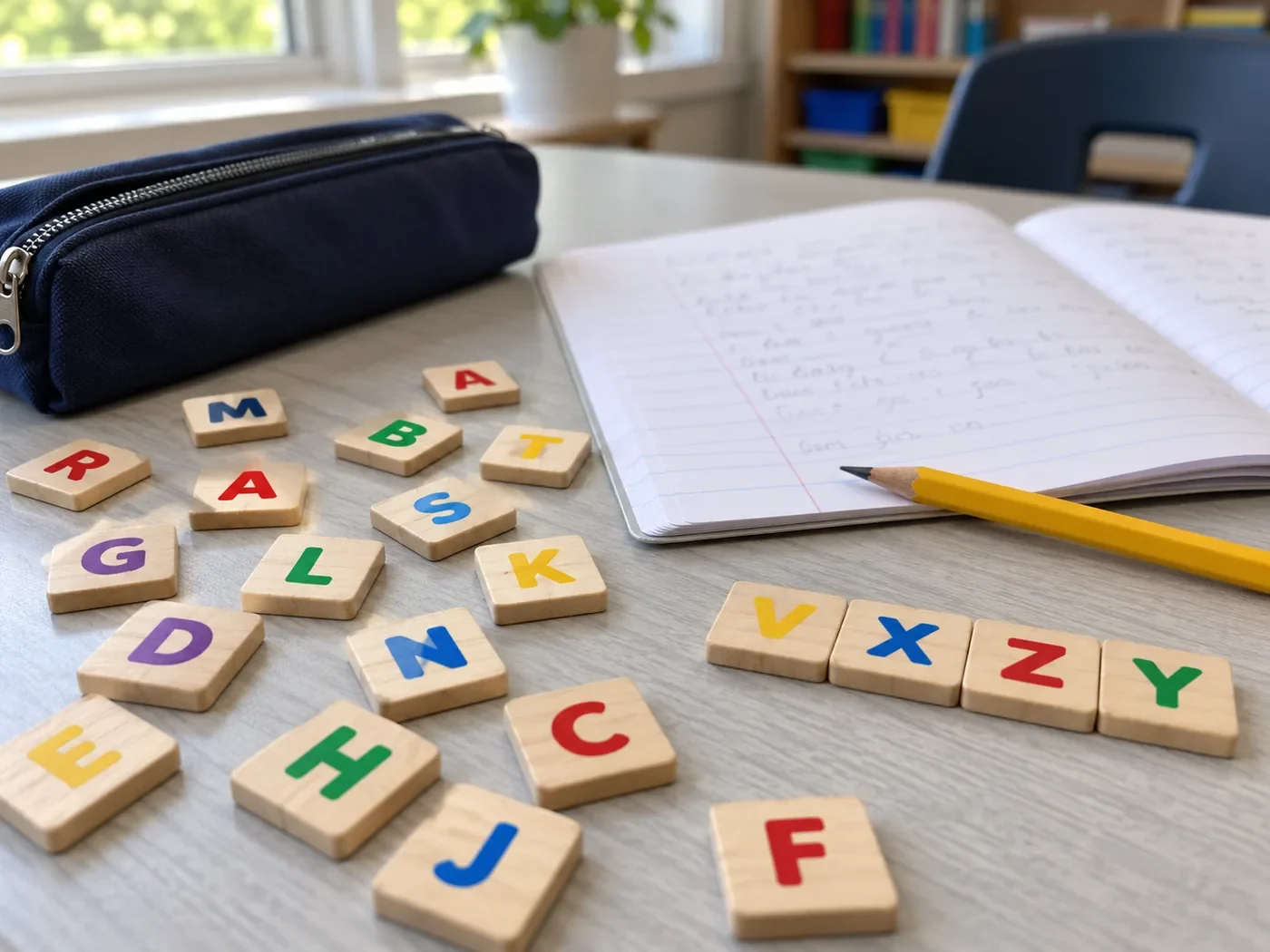
Children learn to spell by connecting the sounds they hear to the letters that represent them, then learning which of several possible spellings a word uses. Every word in Spelling Boost is mapped sound by sound to its spelling, 88,567 links across the word base, using the sounds of Australian English. A single sound can take several letters (the igh in night), and a letter can be silent or work with another one (the e at the end of cake).
Students see this as the sound map in Word Explorer; teachers get sound buttons in each word’s dossier. Irregular words get the same treatment, because they are rarely irregular all the way through. In friend, four of the five sounds are spelt the usual way. Only the ie is unexpected, and that is the only part a student has to learn by heart.
Syllables and their types
Long words are spelt a syllable at a time. Every word is split into syllables (Word Explorer’s “Clap it out”), and each syllable has a type: closed, open, vowel-consonant-e, vowel team, r-controlled or consonant-le. The type is worth knowing because it predicts the vowel sound: the a in the closed syllable of rabbit is short; in the open first syllable of paper it says its name.
In the later years the lists turn to stress and the schwa, the unstressed vowel that sounds the same whatever letter spells it. It is why separate and definite catch so many writers, and why a related word with the stress moved (definition) is often the best clue.
Word parts, meaning and word families
English often spells meaning before sound. Musician keeps the c of music, so its /ʃ/ sound is spelt ci; sign keeps a silent g that you can hear in signal. Knowing the base word explains the spelling.
Each word records its prefix, base and suffix, the family it belongs to, and the rule when it changes (drop the e, double the last letter, change y to i). Students build the word from its parts in Word Explorer. The Word Building shelf teaches compounds, plural families, prefixes that change to fit the base (illegal, impatient, irrational), Latin roots and families of related words.
Origins, when they explain a spelling
Word history is used where it explains a spelling today or links a family: ph for /f/ in words from Greek, ject (throw) and port (carry) from Latin, then spect, struct, tract and the cede/ceed/cess family in the secondary years. A root that turns up across science, history and English helps a student spell and understand words they have never met. History is there to explain, not as trivia.
Words in a sentence
Dictation follows the NAPLAN pattern: the word, a sentence that gives it meaning, then the word again, read in an Australian voice. Meaning settles what sound can’t. Their, there and they’re, or affect and effect, can only be told apart in a sentence, and thousands of questions in the bank turn on a homophone in context.
Each of the 15,012 sentences is used three ways: to hear and spell the word, with a misspelling highlighted to fix, and with a misspelling the student has to find first. Those are the formats NAPLAN’s Language Conventions test uses. In the Narrative and Persuasive Toolkits, where a word’s sense matters most, a person checked 360 of the sentences to make sure each word is used in the sense its list teaches.

One focus, then review
A weekly list of unrelated words teaches little beyond those words. Each built-in list names one teachable focus and groups its words by it. The word-study lists, seven a year, hold fifteen words in three groups of five: five that make the pattern plain, five that stretch it into harder words, and, in most later lists, five words from earlier lists for review. The sequence moves from simpler to more complex spellings across Years 3, 5, 7 and 9.
| List | Year 3 | Year 5 | Year 7 | Year 9 |
|---|---|---|---|---|
| 1 | Vowel patterns | Variable graphemes | Stress and schwa | Stress across word families |
| 2 | Silent letters | Schwa and unstressed vowels | Variable graphemes | Etymological patterns |
| 3 | Multisyllabic words | Multisyllabic strategies | Complex suffix changes | Complex spelling generalisations |
| 4 | Inflectional endings | Suffix spelling changes | Nominalisation | Abstract nouns |
| 5 | Doubling before suffixes | Derivational suffixes | Latin root spect | Latin roots cede, ceed and cess |
| 6 | Bases and affixes | Latin root ject | Latin roots struct and tract | Latin writing roots |
| 7 | Homophones in context | Latin root port | Greek combining forms | Greek disciplinary vocabulary |
The word-study lists sit in a larger library of five shelves for each of those years. Spelling System (sounds, patterns and syllables), Word Building (word parts and origins) and Curriculum Vocabulary (science, maths, humanities and the other learning areas) hold eight lists each. A Narrative Toolkit and a Persuasive Toolkit hold four each, of words chosen for a job in a story or an argument. Even the curriculum lists are built around a spelling idea, such as a shared base or a combining form, so subject words strengthen spelling too. Each list records the Australian Curriculum v9 English content it addresses and, where it fits, the Literacy Progression’s spelling indicators. The 36 NAPLAN practice tests sit apart: they are for getting used to the test, not for teaching one feature.
Recall before the answer
Trying to remember a word does more for memory than copying it, and an answer a student can copy is one they don’t have to remember. So a missed word comes back in a rematch, in the same kind of question it was missed in, with Coach’s corner beside it. Help unlocks one step at a time:
- Before another try. The kind of miss (a sound spelling, a letter pattern, word building, word history or a typing slip), the student’s last try with the wrong letters marked, and the word face down: only its length shows.
- After a try. The spelling tip for that word, with the word itself taken out. The rule stays; the answer goes.
- After two tries. The word’s syllables and parts (prefix, base, suffix), and a Hold to peek button for a moment’s look at the word.
- Once it’s won. The full tip, the word with its tricky letters marked, and where the word came from. Nothing moves on until the student is ready.

The first attempt always stands. A word put right in a rematch is won back, and still counts as missed on the original task, because that is what the evidence is for. A word is retained only when the student spells it correctly on another task at least seven days later. Teachers see the three apart: needs practice, won back, retained.
Mistakes, explained
A misspelling usually shows what a student knows. Becuase has every sound; nite spells each sound in a reasonable way and misses the pattern. So the word base holds 62,002 likely misspellings across 12,562 words, each with the kind of mistake it is (a sound, a letter pattern, a word part or a word’s history) and a way to fix it. For neccesary: “It’s one ‘c’ first, then two ‘s’s. Remember: one Collar, two Sleeves.”
Coach’s corner uses them, so where the library has the student’s exact misspelling, the clue speaks to that mistake; otherwise it speaks to the word. Students hear about their mistake in plain words: “Your ears got it right — the letters that make that sound are the tricky bit.”
Spelling in their own writing
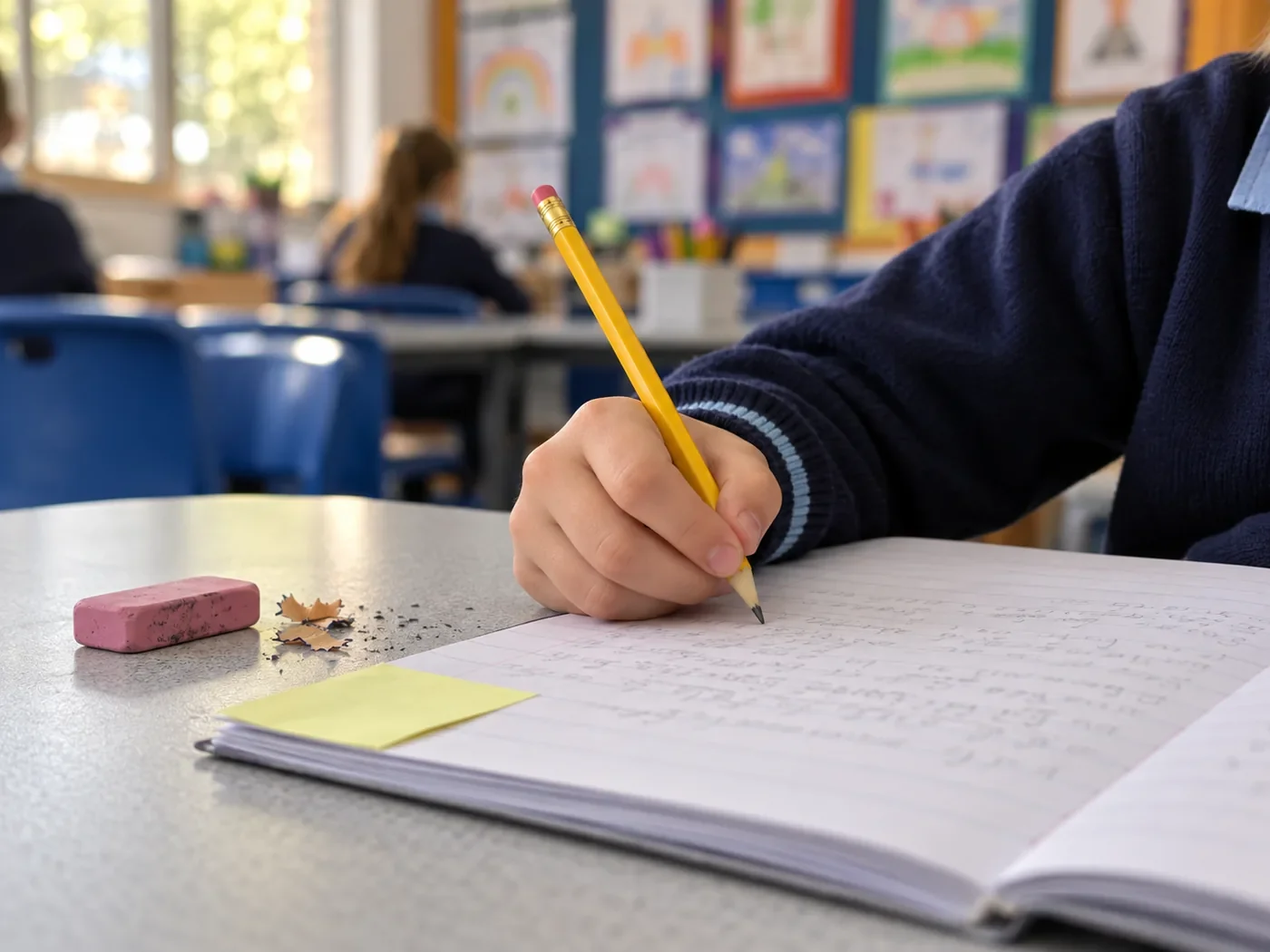
Spelling is for writing, so the two products share their words. When Writing Boost marks a piece, the misspelt words are listed under it and underlined in the writing, with each word’s class. So is the right spelling of the wrong word (there for their), which NAPLAN counts as a spelling error too. From there, Practise these words turns the list into a short drill: look over each word, cover the list, and type it from memory. The words join the student’s list to win back.
Teachers see it from the other side. The word wall shows the words a class missed in spelling tasks, in their writing, or in both, and any word opens its dossier with what the students actually wrote.
The two NAPLAN spellings
NAPLAN looks at spelling in two different ways, and Spelling Boost keeps them apart.
- Language Conventions tests spelling with dictation and proofreading questions, and reports it against year-level standards. Spelling Boost practises those question formats, and its NAPLAN practice tests are assembled from past NAPLAN spelling questions.
- Writing marks spelling in a student’s own writing on one scale for every year level, sorting words into four classes: simple, common, difficult and challenging. Every word in Spelling Boost carries its class, set by the same rules as Writing Boost’s marker, so a word means the same thing in both products.
Neither one is a prediction. Spelling Boost does not estimate a NAPLAN result.
What the teacher does
A test on its own is not explicit instruction. Spelling Boost gives a teacher the words, the questions, the evidence and the explanation of each word. The teaching is still the teacher’s:
- Choose the focus that fits your school’s sequence of sound–letter relationships and word parts.
- Model it. Open the word dossier on the board: map the sounds, build the word from its parts, connect its family.
- Practise together, then set the list.
- Read the attempts, not just the score. The Miss map shows what each student wrote.
- Check that it transfers: on a later task, and in their writing.
What we left out on purpose
- No streaks, points or leaderboards. Students keep a word bank of words they have spelt and kept: a count that can only grow, not a score that can fall.
- No verdict on the speller. No star ratings or labels for the child. Schools can hide scores from students altogether.
- No AI in the moment. Every clue a student sees was prepared and checked ahead of time, so nothing is generated while they practise.
- No unsuitable words. Words that aren’t right for a classroom are kept out of student practice, and their pronunciations are withheld.
- No copying the answer. Spell check, autocorrect and autocomplete are off in every question.
Sources
The lists and the teaching advice on this page draw on these. They are teaching references, not endorsements of Spelling Boost.
- ACARA: Australian Curriculum Version 9.0 English
- ACARA: National Literacy Learning Progression, Spelling
- NSW Department of Education: Spelling instructional sequences, Years 3–6
- NSW Education Standards Authority: English K–10 outcomes
- NSW Department of Education: Explicit spelling instruction (PDF)
- Victorian Department of Education: Word morphology
- AERO: Writing and writing instruction
- AERO: At a glance — Explicit instruction