Planning questions
- Which plastic item will you choose, and where is it used?
- What could replace it, and how practical is that?
- Who would need to change their habits, and how would you convince them?


PersuasiveYears 3–9
Many plastic items are used once and then thrown away. Choose one plastic item people should use less often, and write to convince the school council that a better replacement is worth the change.
Make your position clear and support it with reasons and examples.


PersuasiveYears 3–9
Use Less Plastic?
Many plastic items are used once and then thrown away. Choose one plastic item people should use less often, and write to convince the school council that a better replacement is worth the change.
Make your position clear and support it with reasons and examples.
Follow an object through a change in a story, or argue for one practical change.
Support: Brainstorm plastic items used in a school day, then choose the one you can say the most about.
Extend: Acknowledge a cost or inconvenience of your replacement and explain why it is still worthwhile.
Choose one skill from your current teaching. Model it and practise it together before students write, then check it again in a later task.
How to teach persuasive writingOriginal Writing Boost classroom resource for Years 3–9. Print and share with your class.
Writing Boost marks students’ writing and gives each writer feedback for their next draft.
Bring typed work into Writing Boost, or review a transcript of a handwritten piece before sending it for feedback.
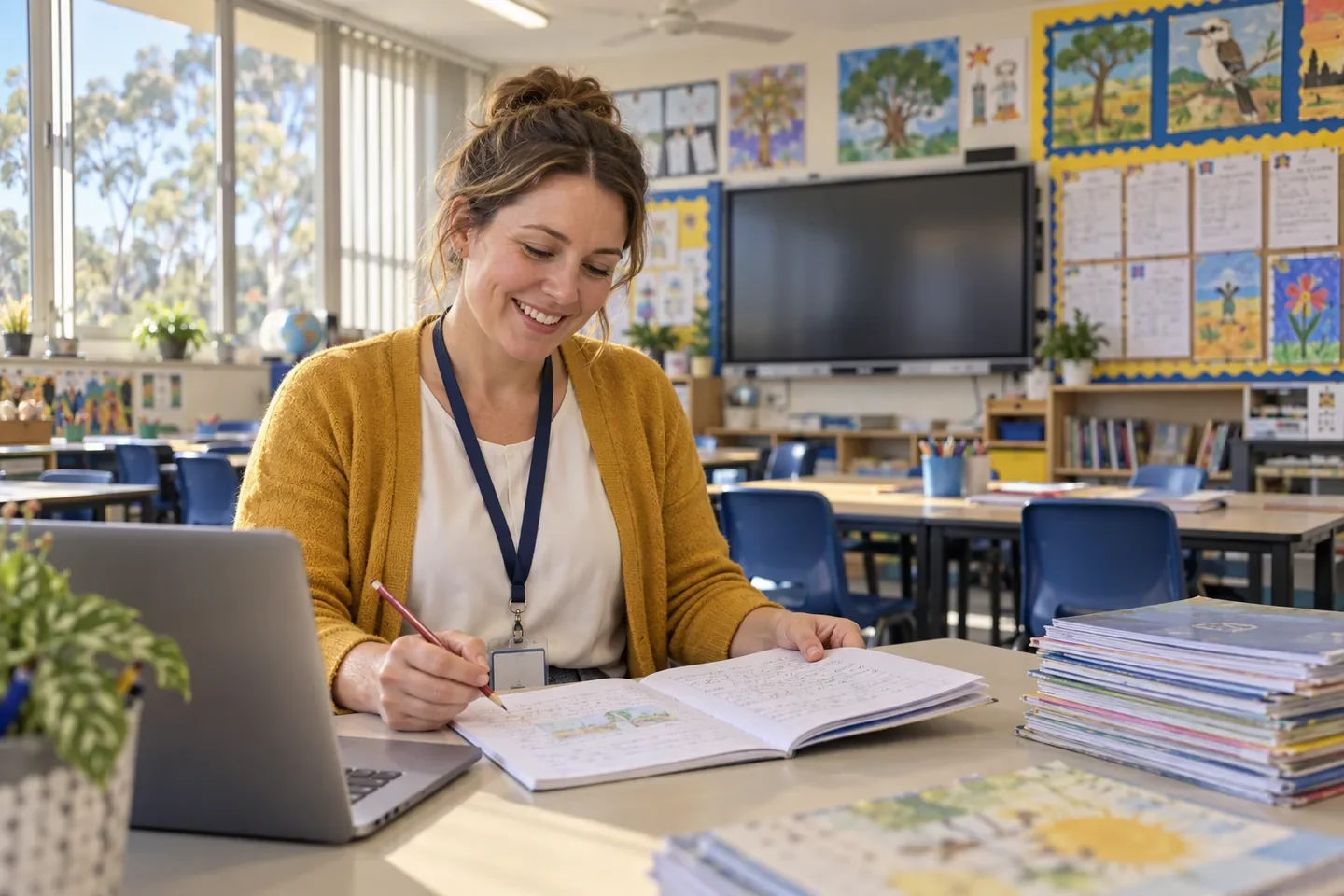
Students see what is working and where to focus next, with a specific change to try in their draft. From “improve your vocabulary” to a next step a writer can act on.
Feedback stays close while students revise. Compare versions to see what changed and talk about why. Students make the changes. The writing stays theirs. See a writing example

See criterion results across your class, spot shared needs and strengths, and open the student work behind them.

Illustrative product views with example writing and fictional class data.
Narrative